Web Design5 min read27 June 2026

Why London Businesses Are Moving to Next.js for Web Design

Next.js has become the default choice for performance-focused London web projects. The reasons are concrete: faster pages, better Core Web Vitals scores, lower hosting costs and a development workflow that avoids the plugin debt of WordPress.

next.js web design londonnextjs londonreact web design london
Why London Businesses Are Moving to Next.js for Web Design

01

What Next.js is and why it matters for business sites

Next.js is a React framework developed by Vercel that allows developers to build websites that serve pre-rendered HTML to browsers — which loads faster than JavaScript-generated pages — while still supporting dynamic content, server-side logic and interactive components where needed. For business websites, this matters because page speed is a direct Google ranking factor, and pre-rendered pages score significantly higher on Core Web Vitals metrics like Largest Contentful Paint and Cumulative Layout Shift. A Next.js site deployed to an edge network (Cloudflare Pages, Vercel or similar) typically serves pages in under 200ms from London data centres, compared to 600ms–1.5s for a typical WordPress site on shared hosting.

02

Core Web Vitals: the SEO reason to use Next.js

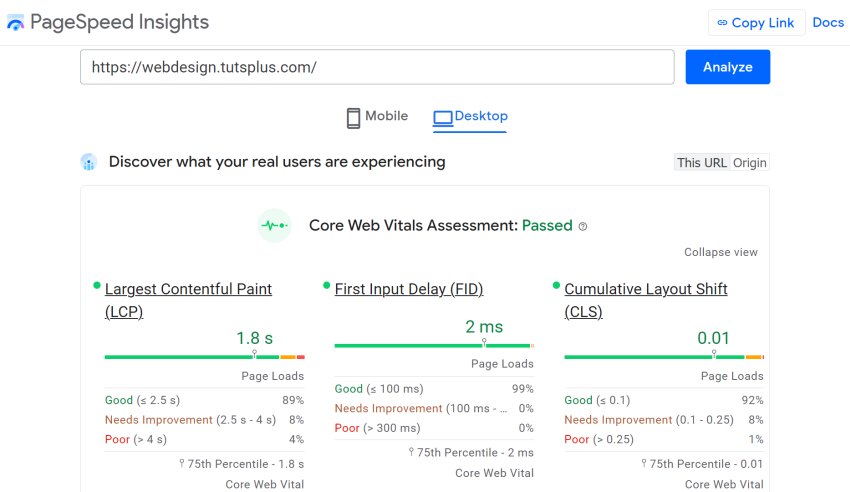
Google's Core Web Vitals — LCP, FID (now INP) and CLS — are direct ranking signals in Google Search. WordPress sites with typical plugin setups routinely score in the 30–50 range on Google PageSpeed Insights; Next.js sites built with performance in mind regularly score 90–100. The difference translates directly to search ranking for competitive London keywords. A service business in a competitive London sector (solicitors, accountants, estate agents, builders) that moves from a slow WordPress site to a fast Next.js build typically sees a measurable improvement in organic rankings within 60–90 days, with the biggest gains on mobile where the performance gap between platforms is largest.

03

Hosting costs and infrastructure

A Next.js site exported as static files and deployed to Cloudflare Pages costs effectively zero in hosting — Cloudflare's free tier covers the traffic of most small and medium London businesses indefinitely. A comparable WordPress site on managed WordPress hosting costs £20–£80 per month depending on traffic, plus the cost of security plugins, backup systems and CDN services that are included in a Cloudflare setup by default. Over three years, the hosting cost difference often exceeds the additional build cost of choosing Next.js over a WordPress template, particularly for businesses that would otherwise need managed WordPress hosting to maintain acceptable performance.

04

When Next.js is the right call for a London business

Next.js is the right choice when SEO, speed and long-term maintainability matter more than an off-the-shelf plugin ecosystem. That describes most London service businesses: solicitors, accountants, healthcare providers, trades, creative studios, ecommerce brands, recruitment agencies and tech companies. It is less obviously the right choice for content-heavy publishing sites where non-technical editors need to update dozens of pages daily without developer involvement — though Next.js with a headless CMS like Sanity or Contentful solves this too. If your site's primary job is to rank in London Google searches and convert visitors into enquiries, Next.js will outperform WordPress within the first 12 months and continue compounding the advantage over time.

05

Migrating off WordPress without losing rankings

The biggest fear London businesses have about moving to Next.js is losing the search rankings they have spent years building. Done properly, that does not happen. The process is methodical: crawl the existing site to map every indexed URL, replicate the URL structure exactly in the new Next.js build, and put 301 redirects in place for any URL that does change. Page titles, meta descriptions and heading structure carry over, and schema markup is rebuilt to current standards. Because a faster site usually ranks better, most migrations we run hold position through launch and then improve over the following weeks. We keep the old site live until the new build is verified in Google Search Console, then switch DNS so there is no downtime window.

06

How we build Next.js sites you can edit yourself

A common misconception is that a bespoke Next.js site locks you out of making your own changes. It does not have to. For content that changes regularly — blog posts, team bios, case studies, service pages — we connect a headless CMS so non-technical staff edit copy and images through a simple dashboard, and the Next.js front end rebuilds automatically. For a London business that publishes weekly, this means no developer call for routine updates, while the performance and SEO benefits of pre-rendered pages stay intact. Where a site rarely changes, we hand over clear documentation instead, so there is no ongoing licence cost. Either way you own the code, the hosting account and the content. Every build includes a two-week post-launch support window to settle any questions.

Ready to get started?

Websites from £1,000. Built in London.

Start a project

Related services

Turn the research into a project.

These service pages connect this guide to the specific scope that fits your business.

07863 791100