Sector Guide5 min read26 June 2026

Web Design for Skip Hire Companies in London: Book More Jobs Online

A skip hire website that only lists sizes and phone numbers is leaving bookings on the table — Londoners expect to select a skip, see a price, check permit requirements and pay online before your office opens on Monday morning.

web design skip hire londonskip hire website londonskip company web designlondon skip hire booking
Web Design for Skip Hire Companies in London: Book More Jobs Online

01

Online Booking, Instant Pricing and the Skip Size Guide

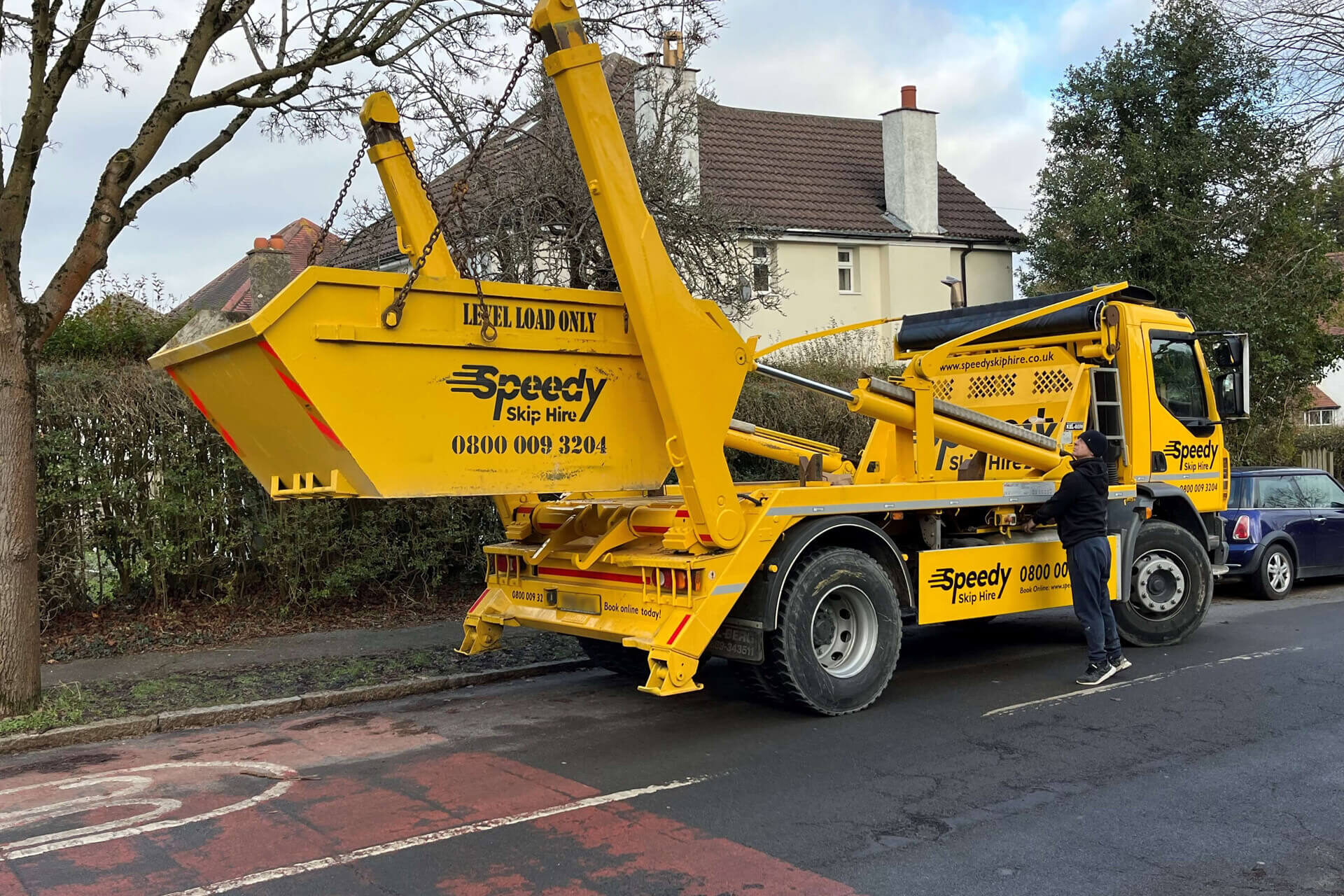
Skip hire is one of the clearest candidates for full online booking in the trades sector. Unlike a bespoke construction quote, skip hire pricing follows a predictable matrix: size, duration and whether a council permit is needed. A website that forces every prospective customer to call for a price is creating unnecessary friction in a transaction that could be completed entirely online — and in a London market where national operators like Skip It and Hippo already offer instant online booking, an enquiry-only site is at a structural disadvantage. The skip size guide page is one of the highest-traffic assets a skip hire website can have, because the most common pre-purchase question from residential customers is: what size do I need? A page that clearly illustrates each skip size with a photograph, lists the cubic yardage, gives real-world examples of what it can hold — a kitchen rip-out, a bathroom refurbishment, a garden clearance — and includes a direct booking CTA for each size converts significantly better than a table with numbers alone. For London customers in particular, where properties are often terraced houses or flats without large driveways, a section on access requirements and what to do if a skip will not fit on private land is practically useful and builds trust. Delivery area maps are a basic expectation that many London skip hire sites fail to meet. An interactive or static map showing exactly where you deliver — with borough-level delivery prices where these vary — answers the first question every prospective customer has and saves enquiry call volume for jobs that genuinely need consultation.
02

Council Permit Pages and Commercial Skip Contracts

Council permits for skips placed on public roads are a genuine knowledge gap for most London residential customers, and addressing this on your website is both a service differentiator and an SEO opportunity. Each London borough has slightly different permit processing times, fees and requirements. A page dedicated to skip permits in London, with borough-by-borough permit fee information and processing times, answers a high-intent question that generates consistent search traffic and positions your company as the expert rather than just another hire provider. The commercial skip hire market in London — building sites, demolition projects, commercial fit-outs, retail refurbishments — operates on different terms than residential hire and deserves its own dedicated section on your website. Commercial clients want to know whether you can provide skips on a rolling contract basis, whether you offer wait-and-load services for time-sensitive demolition work, whether you are licensed to handle mixed waste including plasterboard and hazardous materials, and what your response time is for emergency additional skips on an active site. Waste carrier licence and Environment Agency registration details must be displayed on the website — both because this is a legal marketing requirement for waste businesses and because a growing proportion of London commercial clients require evidence of compliance before signing a contract.

03

Local SEO Across London Boroughs

Skip hire is among the most location-dependent service searches on Google. A builder in Lewisham will not hire a skip from a company based in Enfield when three local providers can deliver next day. The companies winning skip hire searches across London are those with the strongest local SEO signals in the specific boroughs where they operate — which means borough-level landing pages, fully optimised Google Business Profiles and a review generation strategy focused on local customer mentions. Borough-level pages should include area-specific content beyond just mentioning the borough name: the types of properties common in that area, typical projects skip hire customers in that borough are undertaking — loft conversions in areas with high planning approval rates, kitchen extensions, garden landscaping — and specific notes about access challenges common to streets in that area. This level of localised content is what distinguishes a genuine local operator from a national hire platform, and it is what Google's local algorithm rewards. For companies covering 15 or more London boroughs, the site architecture should use a location hub page — an overview of all areas served with links to individual borough pages — rather than trying to rank the homepage for every borough simultaneously. This structure distributes PageRank efficiently and avoids the keyword cannibalisation that occurs when multiple pages on a site compete for the same geographic term.

Ready to get started?

Websites from £1,000. Built in London.

Start a project

Related services

Turn the research into a project.

These service pages connect this guide to the specific scope that fits your business.